Everything we do
works through your
nervous system.
We're a nervous-system-focused practice. Your brain and spinal cord are the master control system for movement, posture, healing and how you experience pain. Every modality we use is a way of communicating with it.
Your body's
master system.
Every heartbeat, breath, step and posture is coordinated by your nervous system. It constantly gathers information from your joints, muscles and fascia, processes it in the brain and spinal cord, and sends instructions back out to move and stabilize you.
When a joint stops moving well or tissue becomes restricted, the quality of that information changes. The nervous system adapts — often by guarding, tightening or altering how you move. Over time, that adaptation can show up as stiffness, recurring tension or pain.
Our job isn't to "put a bone back." It's to change the input, so the nervous system can update its control of the area and let you move freely again.
Sense. Process. Move. Feedback. Adapt.
Your nervous system runs this loop continuously. Our care improves the input, so every lap of the loop gets a little better.
Sense
Receptors in your feet, joints, muscles and fascia constantly report pressure, stretch, position and load — millions of signals every second.
Every modality is a conversation with the nervous system.
Chiropractic Care
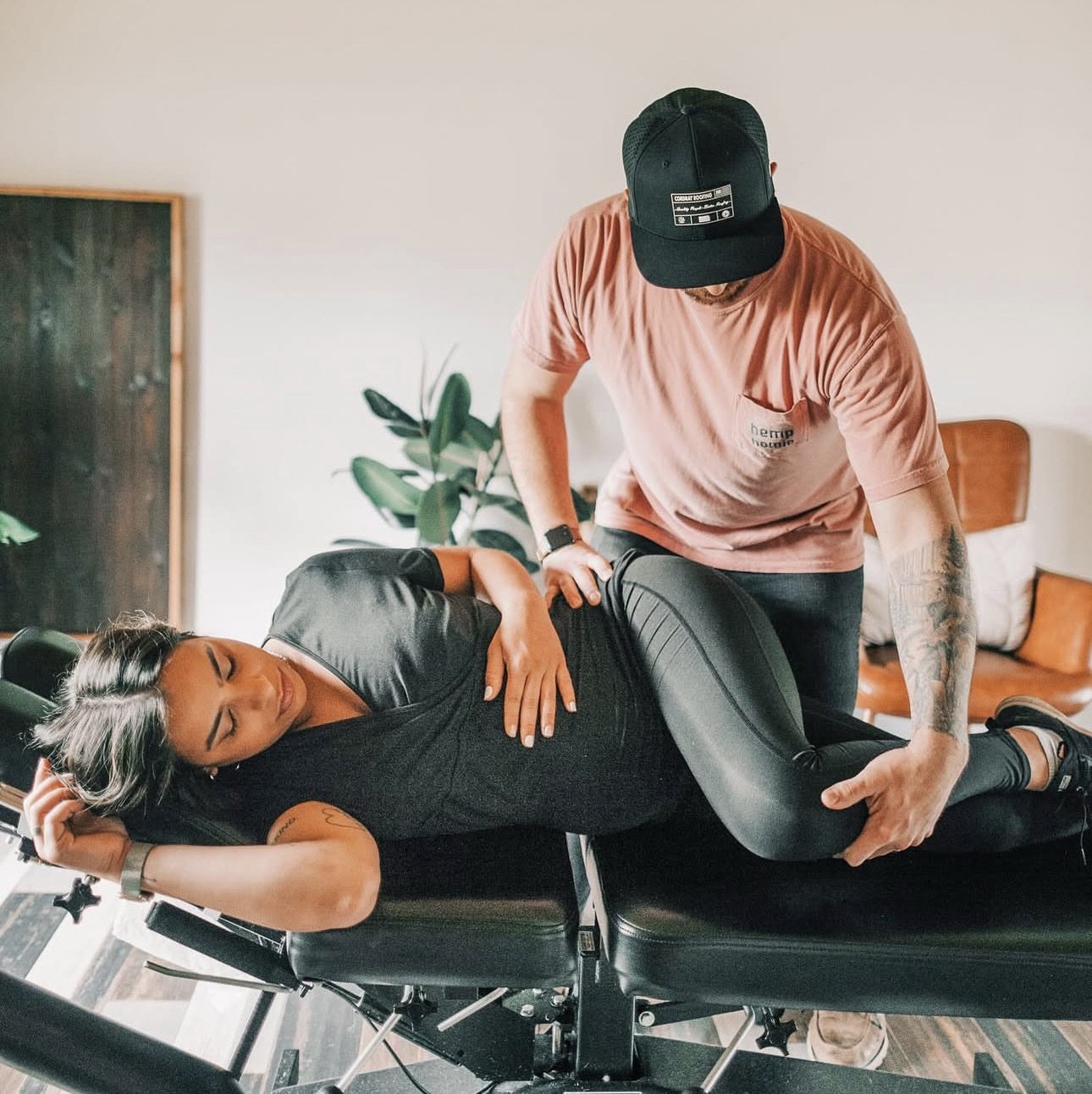
Adjusting a restricted joint changes the stream of information (afferent input) traveling from that joint into the spinal cord and brain. Research suggests this can influence how the central nervous system senses and controls the area — affecting muscle tone, joint position sense and movement coordination.
Myofascial & Soft-Tissue Care
Muscle and fascia are dense with mechanoreceptors. Skilled soft-tissue work alters that sensory feedback, which studies associate with reduced protective muscle guarding and improved tissue tolerance — a nervous-system response as much as a mechanical one.
Functional Movement
Movement is the language of the nervous system. Loading a joint through good motion refines the sensory-motor 'map' the brain uses to control your body, helping restore confident, coordinated movement.
Dry Needling & Cupping
By changing the local sensory environment, these techniques can influence muscle tone and the pain-modulation systems the nervous system uses to turn discomfort up or down.
SoftWave & Laser
These modalities introduce a controlled stimulus at the tissue level that the body responds to — part of the same feedback loop between tissue, sensation and central processing.
Craniosacral & Gentle Care
Very light-touch approaches work with the calming, restorative side of the autonomic nervous system — the 'rest, digest and recover' state where the body heals best.
Top-down. Bottom-up. One loop.
Your nervous system controls the body in two directions at once. Healthy movement and posture depend on both working together.
Top-down
The brain sends instructions down to the body — setting muscle tone, coordinating posture, and using descending pathways to turn pain signals up or down. Stress, focus and past experience all shape these commands.
Calming the system and improving central control (descending inhibition) is one way manual care and movement are thought to reduce pain and guarding.
Bottom-up
Sensors in your feet, joints, muscles and fascia send information up to the brain — a constant map of where you are and how you're loaded. This is why a restricted ankle or hip can quietly change control far away.
Adjustments, soft-tissue work and loaded movement change this input, giving the brain a clearer, more accurate map to work from.
More motion and better posture keep the body pain-free.
The kinetic chain — foot to head — feeds the nervous system with information at every link. When each link moves well, the brain receives a rich, accurate signal and can hold you in efficient, upright posture with less effort.
Research links improved joint mobility and postural control with better proprioception and reduced pain sensitivity. In practical terms: restore motion → sharpen the nervous system's map → improve posture → distribute load evenly → stay comfortable.
That's why we assess the whole chain, not just the sore spot — and why we always reassess and then load. Movement is what makes the change stick.

We don't claim to cure disease. We support how your nervous system senses, moves and recovers — and let your body do what it's designed to do.
This page is educational and reflects current understanding of neuroscience and manual care. It is not medical advice, a diagnosis, or a guarantee of results. Individual experiences vary and care is always tailored to you.